It’s been a whirlwind scouring the web for flexible AI tools that let people source intelligence without handing over every thought or creative decision to another proprietary software. Although knowing an AI purist out there would someday come to the inevitable conclusion I had to arrive at after much quibbling… made the faith worth keeping.
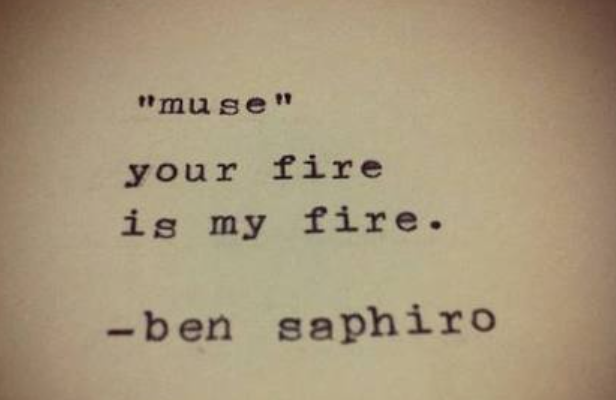
So yeah, if you’re trying to make AI make sense in ways that don’t dabble with your creative frequency (or daily chit-chat with your muse), this list is worth a peek.
A. Anything LLM
I’ve got this running doc of ‘sentence builders’ I consult when stuck between the previous full stop and the next paragraph. Traditionally scouring it every time for the right words takes eons. Anything LLMs allow me to chat with the doc. You can download it on your PC for free.
B. Brave Leo
We both know how much LLMs hallucinate. But even the most sentimental AI purist knows that exploring every online material word for word isn’t the sort of work our raging creative souls can find satisfaction in. While you still need to visit the web page, Brave Leo summarizes it with PHD level precision so you pinpoint what’s worth reading. It’s free to install.
C . CodeFormer
The brightest creative ideas are not all that original. Most are suds bubbling from the blurred details of yesteryear. Take away the blurriness, and you might just be on to something. CodeFormer’s robust face restoration algorithm can help bring blurred photos to life in creative new ways. Entirely free to use.
D. Demucs
Great artists (Michelangelo, Beethoven, and the like) spent a huge number of their waking hours unthreading knots their predecessors spent a lifetime tying. Obsessively trying to manipulate popular art into owned craft. Demucs isn’t promising a life free of the 10,000 hours of practice needed to become a master of any craft, but if your thing is music and you’re looking to isolate the individual ingredients of a song, it sure helps. Free demo on Hugging Face.
E. Elicit
Readers with bottom-line desires can sense surface-level research from miles away. Be it a blog post or press release, you want your big idea to be backed by undisputed evidence. Elicit elicits the scientific database (over 138 million academic papers) you need to make your ideas believable. There’s a free plan for casual exploration.
F. FUTO Voice Input
If, like me, your muse loves to amuse you at weird moments – maybe when you’re doing the dishes or washing the car – then you probably need FUTO. It’s a voice input app that allows you to transcribe conversations on the go. But please, iOS users, skip this one … Android only.
G. Granola
No need to stir the waters about how we all hate having bots look us in the eyes and listen in on our meetings. Granola is no different in terms of the listening part. And I hate it for that. But for the fact that it can go undetected (doesn’t have to take up its own screen space like an external supervisor), I deem it worthy of this list. You can test ride the free plan.
H. Harper
Data is the new oil, as most creatives like to say. And Grammarly and the like have been having their way with your data for way too long. If you want something more private – say, a grammar checker with no LLM in the loop, and that never trains models on your writing – Harper‘s AI tool might be worth a try. It’s free to install.
I. iA Writer
It worries me how AI tools like ChatGPT and Claude swept existential creativity problems like plagiarism under the rug. So much so that it’s now safe to paste a prompt and publish the regurgitated output under your name. iA writer is not fighting against plagiarism (or our inclination towards intellectual theft), but it can keep you committed to the art and craft of writing in ways your muse would someday thank you for. Free to try for 7 days.
J. Jan AI
Barebones, I find LLMs repulsive because they were trained (and continue to get trained) on data the authors weren’t credited for. I’m also guessing I won’t feel the need to be an AI purist if I’m certain my prompts and files are not routinely sent to an external AI provider. Jan AI tool promises not to. Don’t know how true that is. Free to download, though.
K. Karakeep
The best creatives are collectors. From cribbing roaming ideas on parchments and clay, to stick-it notes and now … bookmarks, we’ve always prioritized efficient ways to keep inspirational ideas at bay. Karakeep AI tool helps in automatically tagging and storing links, notes, and images for easy retrieval. It’s paid, but offers a free-forever plan.
L. Lama-cleaner
Pictures are only worth a thousand words when, years later, they still reflect the presence of a here and now we once knew. But not all pictures are taken to encapsulate the present moment; some are better off beautifying the future. Lama’s AI tool erases objects, text, and watermarks that might want to hinder your picture’s journey through time. It’s free to use.
M. Mochi
I tried to avoid denting this list with generative AI tools. Didn’t want anything to do with platforms claiming that they simply need a vision to automate the creative process. Mochi is one such tool, and it annoyingly made my list for lack of a better pick. It claims to be changing the game in video generation. And the AI tool is free to try.
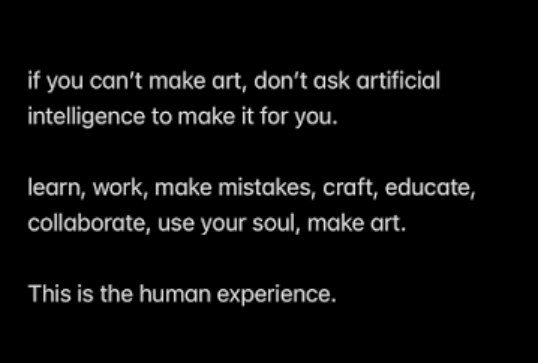
N. Napkin AI
I love to write. And there’s this larger-than-life thrill I relish following long blocks of text to wherever my muse may lead. But won’t pretend that beautifully designed visuals don’t float my boat. Although with AI parading as a master of the sum of averages, I can’t promise that Napkin AI, whose core product promise is that it can turn text into visuals worth sharing, would appeal to pro designers the same way it gave me the chills. But it’s got a free plan.
O. OpenVoice
I’d be lying if I said I wasn’t scared (and still scare) over the authenticity implications of AI. Every passing day draws us closer to a reality where we won’t be able to depict who said what or why. But woe betide me to shy away from the limitless possibilities of this brave new world. Especially with OpenVoice making it easy to replicate the intonation of anyone you care about… in multiple languages. It’s free to try.
P. ProWritingAid
The mere fact that we all have distinct digital footprints shows that we leave traces of ourselves in everything we do. Piece together the traces and oh… what stories we would tell. ProWritingAid helps build the routine we need to show up for the piecing-together process. Offers a free plan.
Q. Quire
This is not really an AI-powered pick, but you know, Q is among the top 5 letters that rarely spawn name ideas for people or products. So if you’re looking for a free-to-try task/project manager that doesn’t keep you locked into any ecosystem, Quire should be right up your alley.
R. Readwise Reader
If writing is thinking, what is reading? And don’t go all cliché on me with studying or learning. I’d prefer you even tell me something as metaphoric as reading is breathing; because why not, we read compulsively every single day, so much so that even videos without subtitles rarely tickle our fancy. Anyways, Readwise Reader is a reading companion for highlighting and saving the quirky stuff you come across online. Free to get started with.
S. Subtitle Edit
I guess the name gives away this one. So, no long talk, use Subtitle Edit to get your video subtitles back on track. It’s free to use.
T. Transkribus
I learned the hard way how it was possible to stand upon the shoulders of giants and yet still not have our heads above the water. But that doesn’t mean we should undermine the austerity of the extra leap. Transkribus helps put old text into perspective. If you’ve got a manuscript for the history books and have a hard time interpreting the handwriting, feed it to this AI tool. It’s free to use.
U. Upscayl
I feel like I’ve listed too many tools for revamping old images. And still don’t feel the need to pretend that this one is any … special. If you’ve got low-resolution pictures, Upscayl can improve the pixels. Get started at no cost.
V. Vale
I’ve heard talks of content success now depending on the futuristic design behind your style guide. Talks of rigid style guides like AP rules and the like giving way to subjective templates that answer questions like ‘why do I write the way I do?’. I don’t know how true this is, since my experience with having an AI duplicate my voice made things twice as bad, but Vale seems to be onto something. And it’s free to install.
W. Wav2Lip
I want to say I miss the good old days … the time past when our voices were tagged as owned assets. When our words were our words and no one else’s (not for the lack of trying). Yet I can only look ahead … to a future governed by AI tools like Wav2Lip, capable of turning any audio into realistic lip-synced videos. Check it out for free.
X. X-Mind
Still feels weird to be writing about a product that’s insinuating that ideas would grow better when stripped of the irrationality of thoughts and strapped to AI’s rational straitjacket. Crazy times we live in, eh? Anyways, X-mind is free to try out. And if I must describe its essence in a sentence, I’d say it’s a brainstorming tool for tired minds.
Y. Yoast SEO
Yoast is one of my few picks that was in existence long before AI, and that I’m betting on to outlive the hype. Because why not? Aside from the inclusion of text generation tools for SEO-optimized titles and meta descriptions, it’s still one of the best plugins with a free plan that gets your website on Google, fast.
Z. Zettlr
I like to believe everyone is creative at heart. Even academicians. While the naive voice in my head is trying to say otherwise, I genuinely don’t have time for a debate and will just go ahead and present Zettlr… not really AI-powered, but well-optimized for academic researchers in need of a word processor and note-taking app intelligently designed to support their writing process.
Finally
If you’re wondering what conclusion I arrived at after much quibbling (As in hinted in the 2nd sentence of my intro), it’s this:
To retain a sense of sanity in this AI-plagued world, creatives must learn to separate perception from reality.
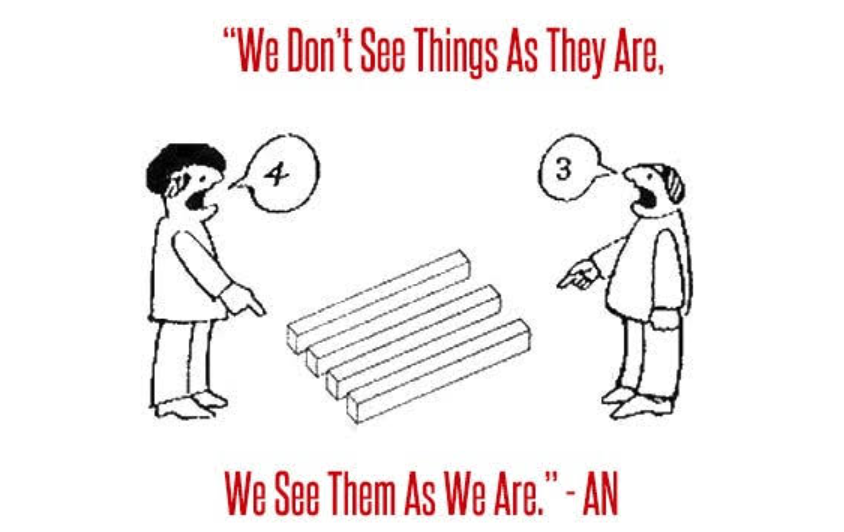
You must understand that perception is first in time while reality is first in end. And that the creative muse exists in our perceptions, and only brings reality to bear when we remain receptive to its ragings.
Before AI, information overload and repetitive learning were our best bet at getting the creative muse to drop by for a booze. But in this post-AI world, where our creative frequency (judgment & taste) leads the pack, we’ve got what it takes to host our creative muse past the high of a booze.
We’ve got what it takes to get her dining and feasting at our abode till mama calls. But that all depends on the tools we choose … and the leap we plan to make with them.
Open Tech World is a blog for creatives in search of the best tools for their creative process. We won’t say our reviews are unbiased (even though they are), but you’ll have a chill time reading them. Till next time.