Let me say this before the pitchforks come out: I use most of these AI tools. Some of them more often than I’d like to admit.
But that doesn’t make it okay to sideline the negative impacts these all-time favorites are having on my creative process. So if, like me, you understand the essence of a blank page, like to dabble with your muse as you put pen to paper, or simply understand that the process/journey is the point, here’re just six petty, oddly genuine reasons to side-eye the internet’s favorite AI tools.
1. Canva: it makes everything look finished
I know, I know. Canva is a sweetheart to most creatives … especially the top 90% (like myself) who barely know sh*t about graphic design but still need to look the part. So it’s normal that it’s all peace and love reading Canva’s G2 and Capterra reviews.
But then … here’s what bugs me. Canva (and its growing pile of AI features) is so good at making things look done that, even when the pros approach it, they still end up with an output identical to roughly four thousand other carousels that week.
Please don’t get me wrong. I’m not saying the design is bad or something of the sort. If anything, it’s on par with average. It’s just that Canva barely leaves room for creatives to wrestle mindlessly with a blank page. It promotes a templated creative process where nobody gets to design much. More like a furnished apartment where you simply park in with your bags. No room to mess around with the interior where taste and personality shine.
2. Grammarly: the red underline that never clocks out
There’s a particular kind of nag that lives in your browser, and it’s the little red line under a sentence you wrote on purpose.
Grammarly, as an AI tool, means well. It really does. But somewhere between fixing a genuine typo and suggesting a “clearer” way to say the thing I deliberately said in a crooked tone, my sentences started to lose their limp. And as they stopped limping, my voice clocked out. Folks stopped recognizing me in me.
So I’d say keep in mind that a tool that sands every sentence down to the same smooth finish is not editing you. It’s averaging you. Which is a very polite way of saying it makes you sound like everybody else who also said yes to the suggestion.
3. ChatGPT: it claps for everything I write
Share a mediocre intro with a friend and, if they’re a real friend, you’ll get a squint. Share it with ChatGPT, and you’ll get applause, three bullet points on why it works, and an offer to make it better.
I don’t hate it for being helpful. I hate it for being agreeable in ways that only fake, gold-digging friends would be. It’s hard to grow a spine for your ideas when the thing you consult most keeps telling you they’re wonderful.
So if you’ve noticed that you’ve started waiting for the AI tool’s applause to pluck up the courage to hit publish… I’d say it’s high time you took a walk.
4. Notion: the productivity cosplay
Notion (now with AI stirred in) is a brilliant tool. It’s also the most elaborate way I know to avoid doing the work.
I have lost entire Saturdays to building a content calendar so gorgeous that I think I would someday frame it up and send it to my sidechick (I pray my wife doesn’t read this post)… just kidding though.
Anyways, on the bizarre front, Notion’s linked databases, colour-coded tags, and dashboard for dashboards can make you feel like you’re productive … when you’re not. The AI tool has a weird way of making perception rank higher than reality.
If you approach the tool without a strict to-do list on what you intend to achieve within a set timeframe, Notion can make you feel all pumped up about how much you’ve accomplished even when all you’ve done is tidy the doorway.
A tool that makes organizing feel like creating is a dangerous thing to give to someone whose muse is already prone to window shopping.
5. Midjourney: everything is pretty, nothing smells of anything
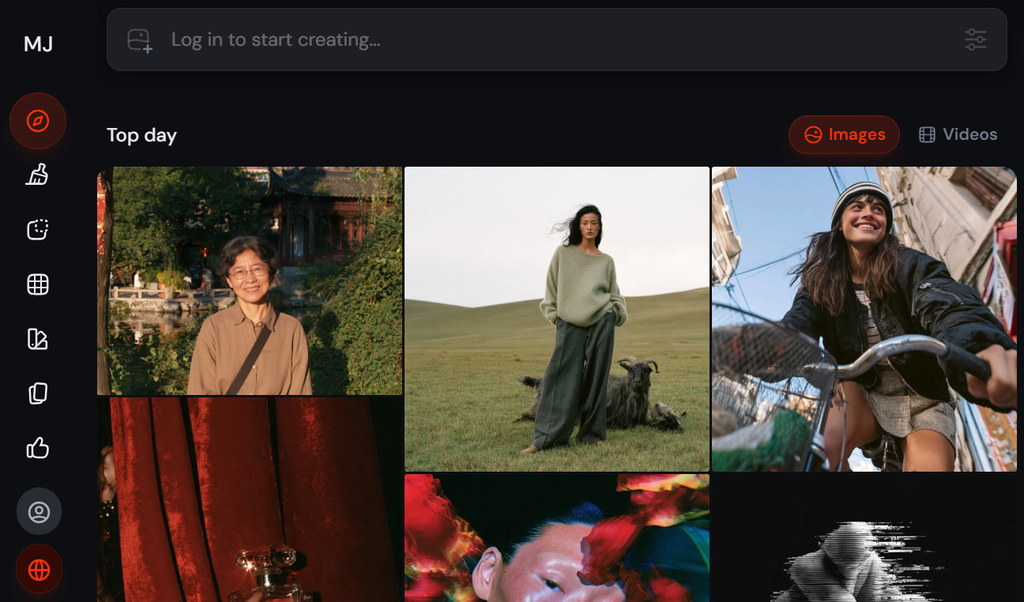
Type a few words. Wait. Receive something so shiny that you start to doubt the capabilities of your professional graphic designer. You might even start to feel like firing them.
I must admit that the first time I used Midjourney, I texted my bro that I might not be needing his services anymore (just like most of my writing clients did when Claude was all the rage).
I texted back a few days later, though, after the flatness crept in.
Because beautiful and lived-in are not the same thing. I noticed that a Midjourney image can have every lighting trick in the book … yet feel like a ghost town. So before you get too accustomed to expecting perfection at the speed of thought, train your eyes to recognize the AI tool’s wobble and smudge.
6. Otter.ai: it listens a little too much
This one’s personal. Because I’ve had multiple AI note-takers sit in meetings, transcribe every word, and present a neat summary after. And it’s been lovely.
Except that lately, I’m becoming more conscious of how I unconsciously show up to meetings. I’ve had to pinch myself several times because I now show up half-present, believing Otter AI is paying attention on my behalf.
I keep telling myself I’ll catch up later, knowing I never will. Because how would I, when the notes sit in a folder next to a hundred other notes I’m supposed to catch up on?
So if, like me, you know you will never catch up this way, and your muse thrives on listening to offhand remarks somebody didn’t think was important, you might want to tone down how often you use the Otter AI tool.
So… should we delete everything?
No. Please don’t. I’m typing this on a laptop that has at least three of these tools open.
But I’ve come to realize that the question isn’t whether a tool is good. It’s what the tool takes off your plate, and whether that thing was the workout needed to grow in the field.
Canva takes the struggle out of design. Grammarly takes the friction out of phrasing. ChatGPT takes the doubt out of drafting. Notion takes the guilt out of procrastination. Midjourney takes the wobble out of images. Otter takes the attention out of listening.
Struggle, friction, doubt, guilt, wobble, attention… that’s most of the raw material the muse feeds on.
So I’d say hate them a little. Genuinely, bizarrely, and specifically.
I believe that the healthiest kind of relationship you can have with a tool, especially if you want to thrive in a creative world built on frequency.
👉Open Tech World is a blog for creatives in search of the best tools for their creative process. We won’t say our reviews are unbiased (even though they are), but you’ll have a chill time reading them. Till next time.