There’s something particularly amusing about watching businesses spend years trying to get Google’s attention, only to discover that getting cited or mentioned by LLMs is an entirely different headache.
Well, not entirely different. But different enough to make you wonder whether all those SEO checklists you’ve religiously followed were preparing you for the right examination.
I mean, you’ve got your keywords in place, your comparison articles are ranking, your website is technically sound, and your SEO agency has probably celebrated a few page-one victories.
Yet, ask ChatGPT to recommend the best software for your category, and somehow your brand is nowhere to be found.
Not even an honourable mention.
And before you start blaming the LLM gods for their obvious lack of taste, there’s a little more to this than meets the eye.
First, let’s get one thing out of the way.
Getting cited and getting mentioned aren’t the same achievement.
A citation is when an AI-generated answer references your website or another source, usually through a clickable link. A mention is when the model names your brand, whether or not it links to your website.
You can get mentioned without being cited. You can also get cited without being the brand the answer recommends.
And, depending on the AI system and the question being asked, you might get neither.
A 2025 Social Science Research Council (SSRC) study examining approximately 14,000 real-world LLM conversations found substantial gaps between the web pages AI systems accessed and the sources they actually credited. In its sample, Gemini supplied no clickable citations in 92% of answers, while Perplexity’s Sonar visited approximately ten relevant pages per query but cited only three to four.
So, before you start treating every missing citation as a personal failure of your SEO strategy, understand that the systems themselves don’t always give credit to every source they consult.
That said, there are five things worth examining before you conclude that your brand won’t be getting cited or mentioned by LLMs.
1. Your website isn’t even in the room when the LLMs are having their conversations
Let’s start with the obvious, because sometimes the most sophisticated explanations for poor visibility are hiding behind the most embarrassingly ordinary problems.
Can the AI search systems actually find your website?
I know this sounds like something your SEO should have sorted out before collecting their first invoice. But being available on the internet and being accessible to an AI-powered search system aren’t necessarily the same thing.
Consider Google AI Overviews and AI Mode.
Google’s documentation states that a page must be indexed and eligible to appear in regular Google Search, with a snippet, before it can qualify as a supporting link in these AI experiences.
It also recommends ensuring that crawling is permitted, important content is available in text form, and internal links make pages easy to discover. Meeting these requirements, however, doesn’t guarantee that Google will crawl, index, or serve your content.
And please, don’t confuse this with needing to create some magical llms.txt file before ChatGPT can acknowledge your existence. Google explicitly says there is no special AI text file or additional schema markup required for inclusion in its AI search features.
Technical accessibility is the first hurdle. But getting through the door doesn’t mean anybody knows who you are.
2. Your brand doesn’t have enough of an identity outside your own website
I find this particularly interesting because it brings us back to something branding people have been preaching for years.
Your brand needs to exist in people’s minds before it can become the obvious answer to their questions.
Now, I’m not suggesting that LLMs have little human-like brains in which they maintain a scrapbook of their favourite SaaS brands. But the underlying idea is worth exploring.
An AI system may encounter your brand through its training data, indexed web pages, search results, product directories, reviews, and other information sources. The exact sources available depend on the model and whether it uses live retrieval.
If your brand has very little discoverable information outside your website, there is less independent material from which a system can establish what you do, who you serve, and what makes you recognisable.
3. Nobody outside your marketing department is making a case for you
This is where I’d like to pick a little fight with the obsession over publishing more content.
I understand the appeal. You’ve got a content calendar, a keyword research tool, and an SEO agency promising to publish 12 articles every month.
But if every single thing the internet knows about your product comes from your own marketing department, you might have a credibility problem.
And no, I wouldn’t recommend you start buying guest posts to pile evidence that your brand belongs in a conversation.
The point is to build a brand that other people have a reason to talk about.
4. Your content has nothing distinctive enough to be worth retrieving
I have a little problem with the way some people approach SEO content.
The obsession with satisfying search intent has become so pronounced that we’ve somehow convinced ourselves that the best content is the one that says exactly what everybody else is saying, only with more stuffed keywords.
And now we’re wondering why AI systems keep retrieving the same handful of sources.
A 2024 ACM study by researchers from Princeton University and other institutions, titled GEO: Generative Engine Optimization, tested different content optimisation methods across generative engines.
Its findings suggested that adding statistics, quotations, and citations could improve visibility in certain experimental settings. The researchers reported visibility improvements of up to 40% across their benchmark.
Interestingly, traditional keyword stuffing offered little to no improvement in their experiments.
Now, I wouldn’t take that 40% figure and start promising clients a 40% increase in ChatGPT citations. The researchers were testing a defined benchmark, not guaranteeing commercial outcomes for every website.
But the broader lesson is worth considering.
Content that contributes evidence, useful information, and original perspectives gives generative systems more substance to work with than another article assembled from the same familiar talking points.
5. You think getting cited or mentioned by LLMs is entirely within your control
Finally… and I suspect this might be the most uncomfortable reason on this list, especially for anyone selling GEO services with promises of guaranteed AI citations.
You can have an accessible website, a clearly defined brand, independent reviews, original research, and content that answers your buyers’ questions.
And still not get cited.
Why?
Because you’re not the one deciding which sources an LLM retrieves, which information it uses, or which sources it eventually credits.
Consider the SSRC study I mentioned earlier.
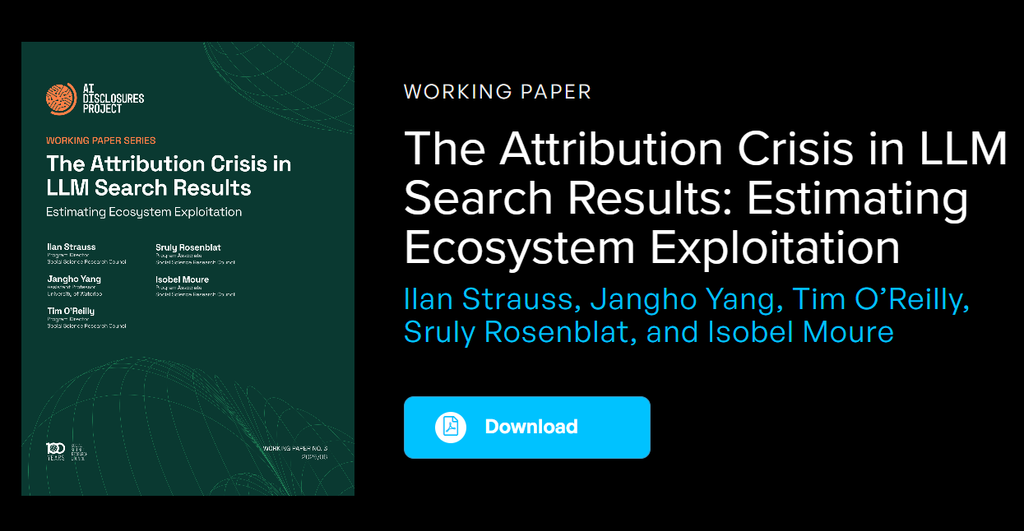
The researchers analysed approximately 14,000 real-world conversations involving 11 search-enabled LLM variants from OpenAI, Google, and Perplexity.
Their findings were rather revealing.
– Across the sample, 15.6% of answers involved no explicit web search.
– Gemini provided no clickable citations in 92% of its answers.
– Perplexity’s Sonar visited approximately ten relevant websites per query but cited only three to four.
– The average query answered by Gemini or Sonar left approximately three relevant websites uncited.
That is, even when your content makes it into the retrieval process, there’s no guarantee your URL will appear in the final answer. And sadly, there’s absolutely nothing you can do about it.
👉Open Tech World is a pragmatic resource for creatives who want to make the task in front of them a little more manageable. We go in search of the best tech tools on the market, compare them, and give you personality-oriented reviews of the software most aligned with your creative process.