
You’re Losing Patients Before They Ever Walk Through Your Door
Every missed call, unanswered booking request, or double-scheduled appointment chips away at your practice’s revenue and reputation. For clinic managers and healthcare administrators in 2026, scheduling isn’t just a back-office function: it’s the first patient touchpoint, and a broken one means patients quietly book with your competitor.
The real problem isn’t staff laziness or poor processes. It’s that most clinics are still running on tools that weren’t built for healthcare: generic calendar apps, spreadsheets, or legacy systems that don’t sync, don’t send reminders, and certainly don’t care about HIPAA compliance. The result is a scheduling workflow that’s equal parts stressful and expensive.
The good news?
A purpose-built medical scheduling platform can fix all of this. Whether you run a solo therapy practice, a multi-location clinic, or a hospital-grade facility, there’s a tool on this list built specifically for your context. Here’s a breakdown of the top 10 options worth considering in 2026.
- Connecteam
Best for: Staff scheduling in clinical settings
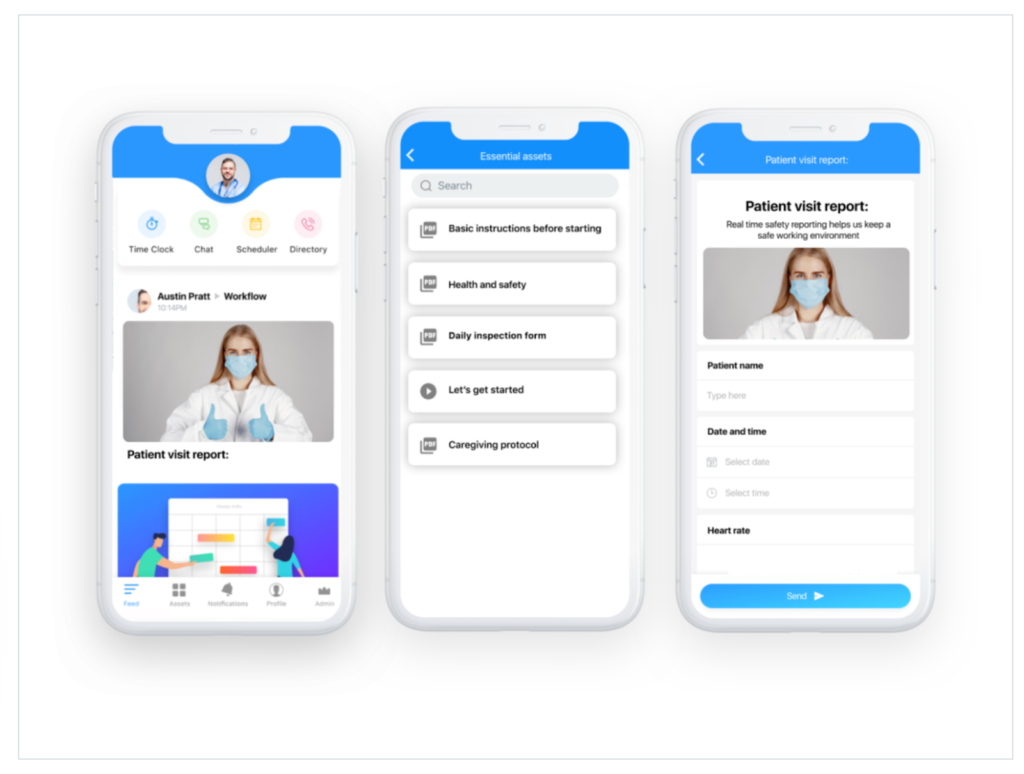
If your scheduling headache is more about coordinating your care team than managing patient appointments, Connecteam is worth a look. It’s built mobile-first, which means your nurses, on-call staff, and front desk employees can manage shifts, clock in, and receive updates directly on their phones.
Key features include on-call scheduling, shift swapping, GPS-based time tracking, and built-in team chat. It isn’t a patient-facing booking tool, so pair it with a patient scheduling platform if you need both.
Pricing: Free for up to 10 users. Paid plans start at $29/month for up to 30 users (billed annually), with Advanced at $49/month and Expert at $99/month.
HIPAA: Not natively HIPAA-compliant as a standalone product; use caution when handling PHI within the platform.
- QGenda
Best for: Hospitals and large health systems
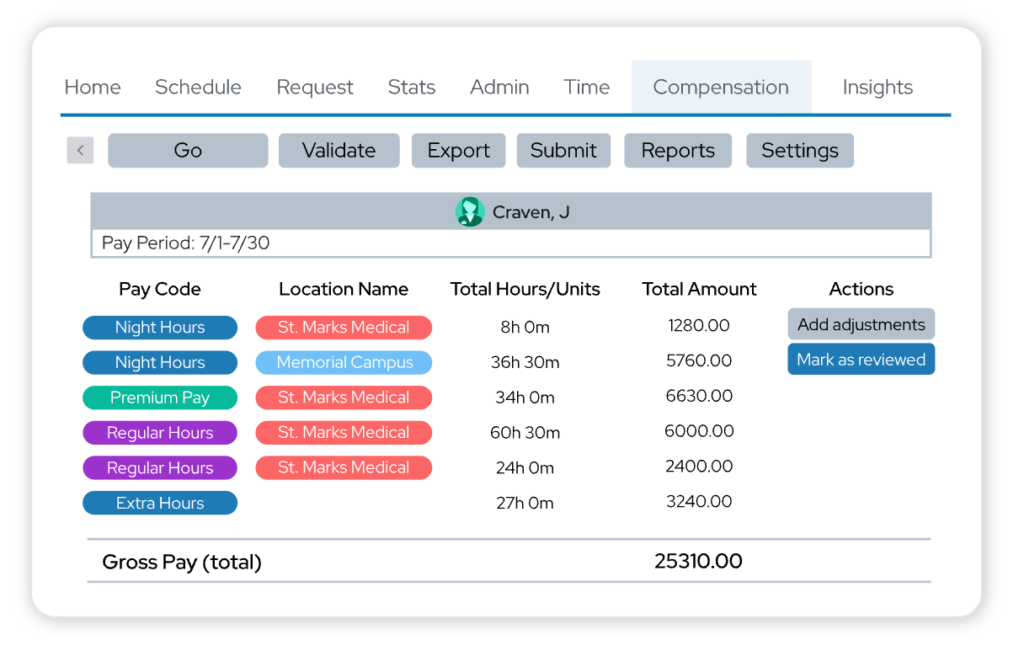
QGenda is the enterprise-grade option on this list. Built for complex healthcare workforce management, it handles physician scheduling, on-call management, fatigue tracking, and compliance reporting across large, multi-department organizations. Its fatigue alert system is a genuine differentiator for hospitals managing resident work-hour rules.
Pricing: Custom enterprise pricing, typically starting around $100+/month per module, depending on organization size. You’ll need to request a quote.
HIPAA: Yes, HIPAA-compliant.
- Zocdoc
Best for: New patient acquisition
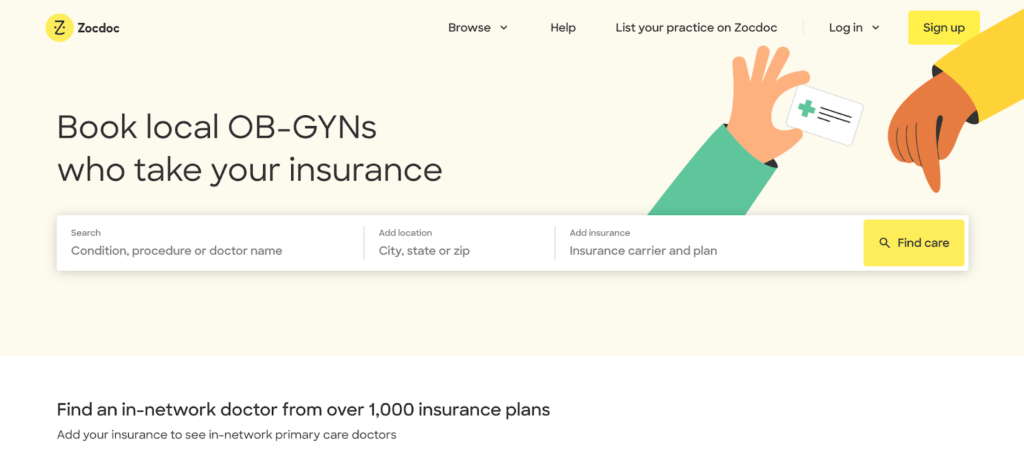
Zocdoc flips the scheduling model. Instead of your staff booking appointments, patients find and book you directly through Zocdoc’s marketplace. Insurance verification happens in real time, which cuts down on claim rejections and front-desk back-and-forth.
If your clinic is trying to grow its patient base and reduce no-shows, Zocdoc’s network effect is hard to replicate. The tradeoff is cost: you pay per appointment booked through the platform, which can add up at scale.
Pricing: Starts at $35+ per appointment booked. Pricing varies by specialty and market.
HIPAA: Yes, HIPAA-compliant with BAA available.
Also read: Using AI for Research: A Proven Workflow for Technical Topics
- SimplePractice
Best for: Therapists, counselors, and behavioral health practices
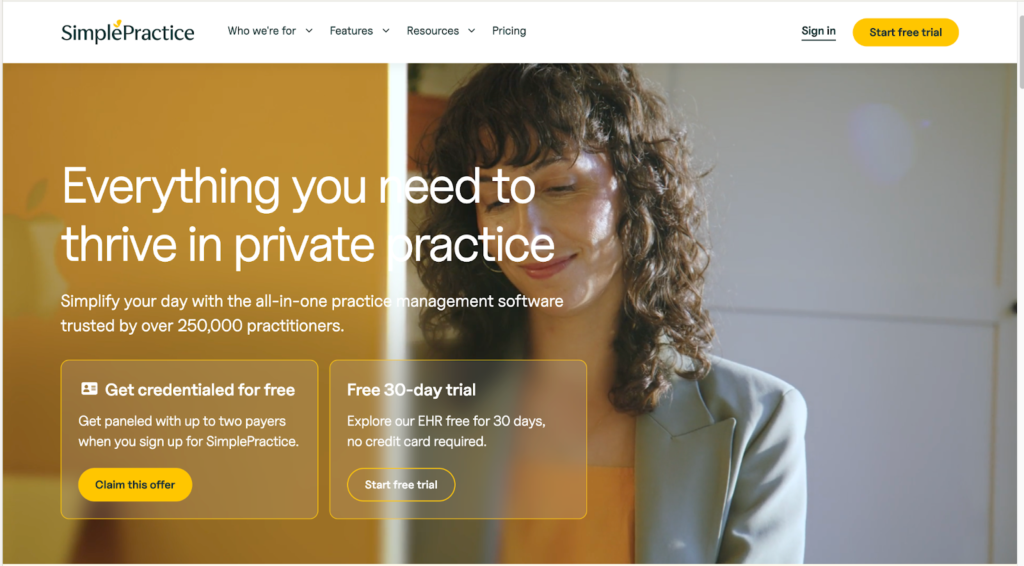
SimplePractice is arguably the most polished all-in-one platform for solo and group mental health practices. It bundles scheduling, EHR, telehealth, billing, and insurance claim filing into one interface. The client portal is clean and easy enough that patients actually use it.
It’s worth noting that pricing has increased since 2024. The Starter plan now begins at $49/month for a single clinician, the Essential plan at $79/month, and the Plus plan at $99/month. If you’re a solo practitioner who previously used the old $29 plan, budget accordingly.
Pricing: Starter from $49/month, Essential from $79/month, and Plus from $99/month. No annual billing option.
HIPAA: Yes, HIPAA and HITRUST certified.
- NexHealth
Best for: Modern, tech-forward clinics
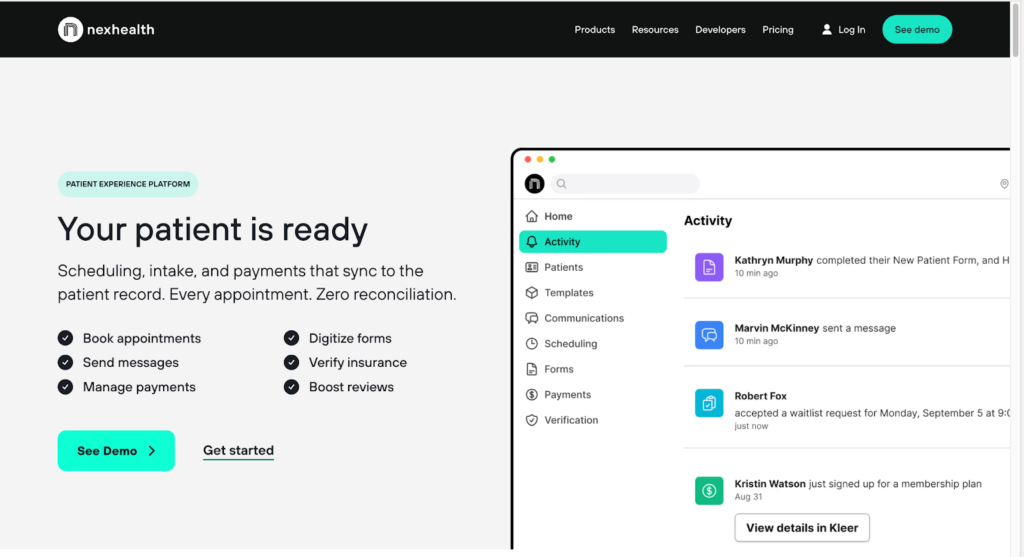
NexHealth is built for practices that want to automate the entire patient lifecycle: digital intake forms, appointment booking, reminders, payments, and recall campaigns all in one platform. It integrates directly with most major PMS and EHR systems, which means data stays in sync without manual entry.
It’s a strong choice for dental, dermatology, and specialty practices that see high patient volume and want to reduce no-shows through smart automation.
Pricing: Approximately $99 to $350/month, depending on practice size and features selected. Custom quotes available.
HIPAA: Yes, HIPAA-compliant with BAA.
Also read: Best Antidetect Browsers in 2026: The Smartest Way To Secure Online Identities
- Emitrr
Best for: Multi-location practices with WhatsApp-heavy patient bases
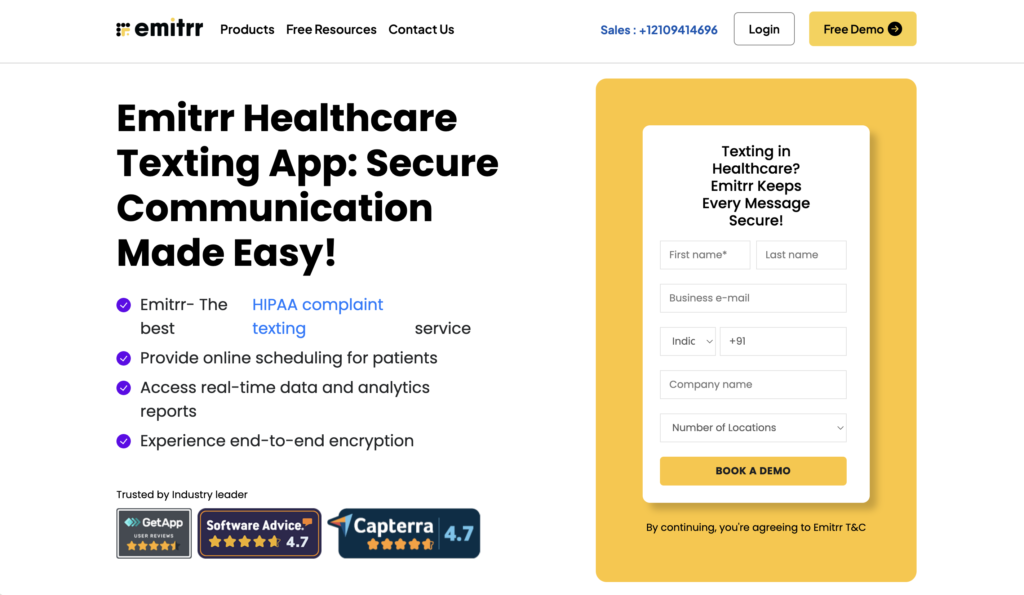
Emitrr stands out for its communication layer. Beyond standard SMS reminders, it supports WhatsApp-based appointment reminders and two-way messaging, which is a significant advantage for practices in regions where WhatsApp is the dominant communication channel. It integrates with a wide range of practice management systems and is explicitly built for multi-location setups.
Pricing: Starting from $50/month. Final pricing depends on the number of integrations and the number of locations.
HIPAA: Yes, HIPAA-compliant.
- Noterro
Best for: Solo practitioners and small wellness clinics
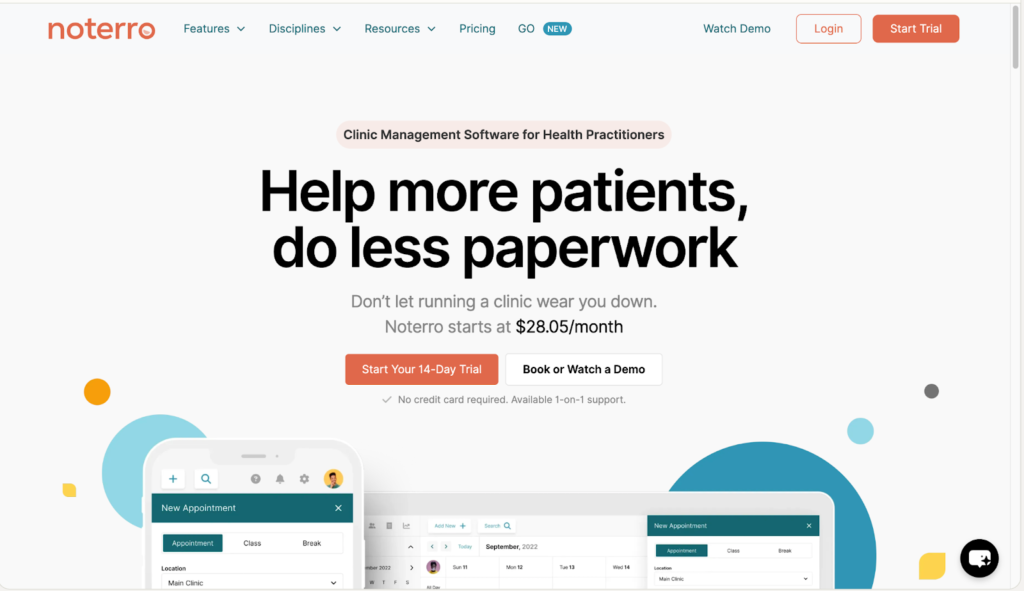
Noterro is a high-rated scheduling and practice management tool built for massage therapists, physiotherapists, chiropractors, and similar solo or small-team practitioners. It handles online booking, SOAP notes, automated reminders, and invoicing without overwhelming you with features you don’t need. Its 4.8/5 rating across review platforms reflects how well it nails the basics.
Pricing: Starting from $28/month.
HIPAA: HIPAA-compliant with BAA available.
- Appointik

Best for: Indian clinics looking for an affordable, locally-adapted tool
Appointik is built with Indian clinic workflows in mind. It supports WhatsApp and SMS reminders, a patient portal, cloud-based appointment management, and multi-doctor setups. Pricing is structured in INR, which makes budgeting straightforward for practices in India.
Pricing: Approximately ₹500 to ₹2,000/month, depending on the plan and clinic size.
HIPAA/DPDPA: Designed for Indian healthcare compliance. Not marketed as HIPAA-compliant, but check with the vendor for your specific data residency needs.
- ClinaNG
Best for: Indian clinics offering telehealth
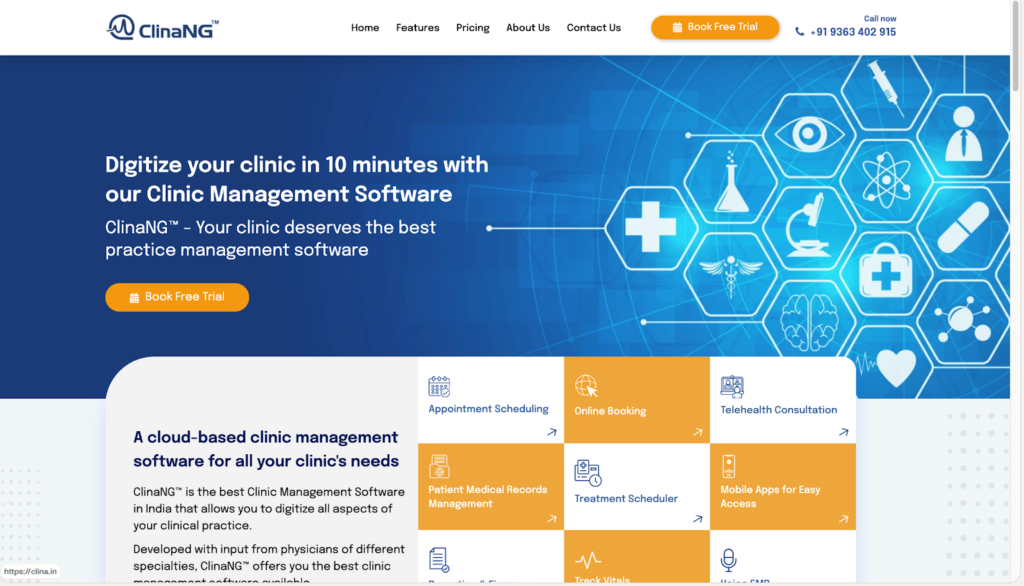
ClinaNG positions itself as an all-in-one practice management solution for Indian healthcare providers, with a standout feature: no-download video calls for telehealth consultations. Patients can join directly via a browser link, removing a common adoption barrier. It also covers appointment scheduling, EMR, billing, and prescription management.
Pricing: Starting around ₹1,000+/month, depending on the plan selected.
HIPAA/DPDPA: Built for Indian regulatory requirements. Confirm data compliance specifics with the vendor.
- Doctors App
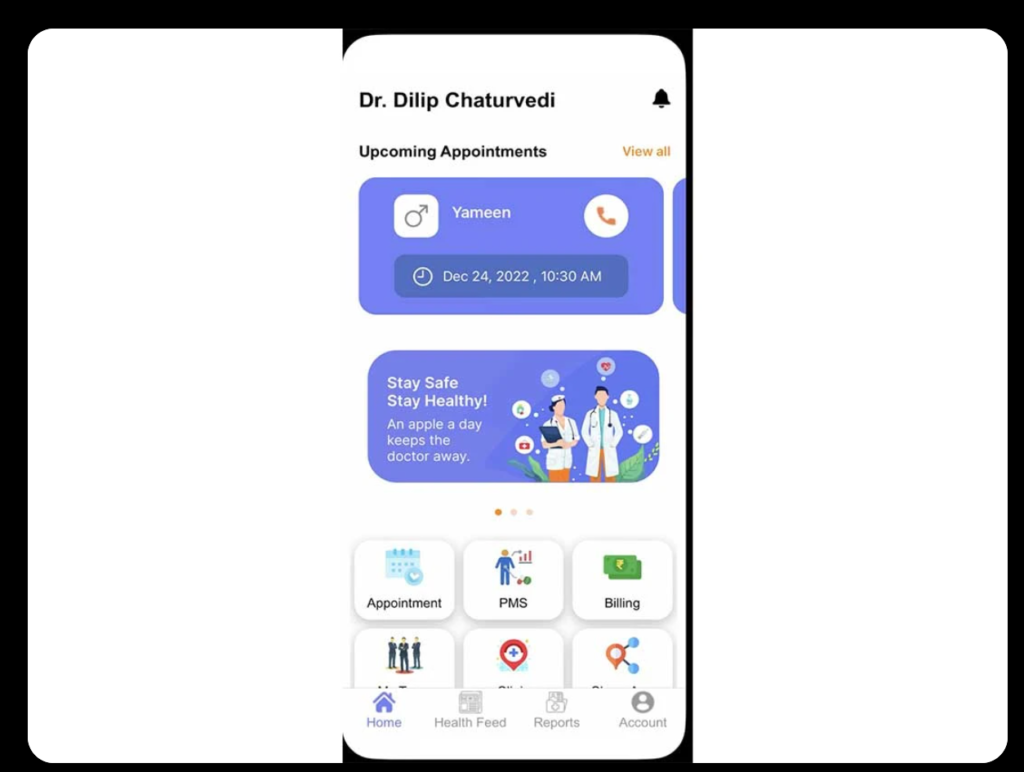
Best for: Multi-provider clinics in India
Doctors App uses AI to streamline patient booking across multiple providers in a single clinic, making it particularly effective for group practices with high daily appointment volumes. EMR integration means patient history is accessible at the point of scheduling, and the AI layer helps reduce overbooking and optimize appointment slots.
Pricing: Tailored pricing for Indian clinics. Contact the vendor for a custom quote based on provider count and feature requirements.
HIPAA/DPDPA: Built for the Indian healthcare context; verify compliance requirements with the vendor.
How to Pick the Right One Medical Scheduling Software
Before you commit, narrow your shortlist by asking three questions. First, who is doing the scheduling: your staff, your patients, or both? Staff-facing tools like Connecteam and QGenda solve a different problem than patient-facing tools like Zocdoc and NexHealth. Second, what does your patient base actually use? In India, WhatsApp-first tools like Emitrr and Appointik will see significantly higher engagement than platforms relying solely on email reminders. Third, does the platform sign a BAA? If you’re operating under HIPAA jurisdiction, this is non-negotiable, not a nice-to-have.
Start with a free trial where available, involve your front desk staff in the evaluation, and don’t underestimate how much of your scheduling problem is a communication problem in disguise.
The right tool doesn’t just fill your calendar; it keeps it full.
People Also Ask
Q: What is the best medical scheduling software for clinics in 2026?
A: The best medical scheduling software depends on your clinic type; for example, SimplePractice suits therapists, NexHealth fits tech-forward clinics, and Appointik works well for Indian practices.
Q: Which medical scheduling software is best for small clinics?
A: Small clinics and solo practitioners often prefer tools like Noterro for simplicity, Appointik for affordable Indian pricing, or Emitrr for WhatsApp-based reminders.
Q: Which medical scheduling tools are HIPAA compliant?
A: QGenda, Zocdoc, SimplePractice, NexHealth, Emitrr, and Noterro are described as HIPAA-compliant, usually with a Business Associate Agreement (BAA) available.
Q: Which medical scheduling software is best for Indian clinics?
A: Appointik, ClinaNG, and Doctors App are built for Indian workflows, pricing in INR, and alignment with local regulations like DPDPA.
Q: How do I choose the right medical scheduling software for my clinic?
A: Decide who is scheduling (staff vs. patients), what channels your patients actually use (email vs. WhatsApp), and whether you need a BAA or Indian data-compliance guarantees.



3 Comments on “Top 10 Medical Scheduling Software for Clinics in 2026 (Features, Pricing, HIPAA Compliance)”